
The Fight Over Words
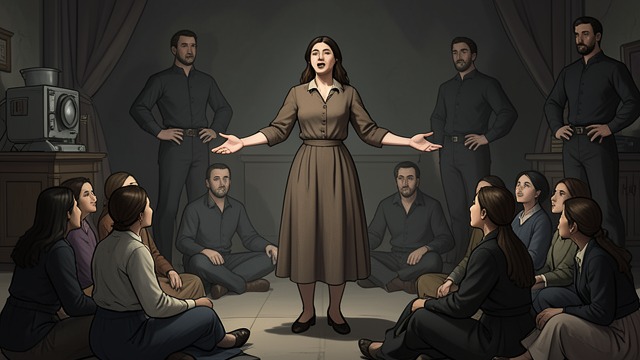
Women TalkingDisputes over whether the women are fleeing, rebelling, or leaving show how language can either impose judgment or make action imaginable.
increasing Bearing strength in each event
 decreasing
Bearing strength in each eventdecreasingLeaving or Fleeing
A Word Becomes a Conflict
Salome’s Objection
Salome Friesen rejects “fleeing” as a description because it implies fear and defeat. Mariche Loewen’s choice of the word provokes a sharp exchange.
Naming the Act
The distinction allows the women to claim intention in their decision. They are not merely driven out; they are choosing to go.
An Insurrection or Not

A Plan Without a Name
Mariche’s Correction
Mariche Loewen objects when the plan is called an insurrection, arguing that the women do not intend violence. Ona Friesen agrees that its proper name remains unsettled.
Language Follows Action
The women’s departure does not fit the available terms. Their struggle to name it reflects a search for political agency beyond the colony’s categories.
The Word Revolutionary
A Dangerous Label
Resistance to the Term
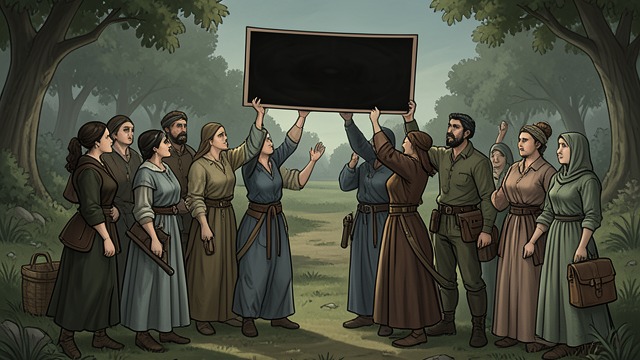
Agata Friesen and Greta Loewen reject “revolutionary,” associating it with armed upheaval and the Russian Revolution. Ona Friesen finds the word compelling.
A Smaller Revolution
Their disagreement reveals that change can be radical without being military. The women are altering who decides, who interprets, and who learns.
Manifesto as Guide

A Statement of Intent
Unfamiliar Political Language
The younger women ask what a manifesto is. Ona Friesen describes it as a statement or guide, and August Epp adds that it may be revolutionary.
A Practical Purpose
The women use the idea to articulate their aims rather than to claim a completed program. Their declaration gives shared direction to an uncertain departure.
The Final Description

Chosen to Leave
A Last Correction
August Epp reminds Salome Friesen that the women are not fleeing. She agrees that they have chosen to leave.
Agency in the Farewell
The exchange gives the departure its clearest name at the moment it becomes irreversible. Language cannot secure the road, but it can preserve the women’s account of why they took it.
June 6, 2009, as the first meeting turns to departure
June 6, 2009, during the discussion of secrecy
June 7, 2009, during the manifesto discussion
June 7, 2009, as the women define their aims
June 7, 2009, in Salome’s parting exchange with August
